Furnace Tune-Up: What Gets Checked and Why It Matters Before Winter
Nov 23, 2026
Southern California winters are mild compared to most of the country, so it's easy to forget about the furnace until the first cold night. Then you flip the thermostat to heat and… nothing. Or you get a dusty burning smell, weak airflow, or a furnace that clicks and tries to light but never does.
A lot of those first-cold-night calls trace back to the same root cause: the furnace sat for months without anyone looking at it. A tune-up is how you catch those problems while it's still a quick fix instead of a no-heat emergency. Here's what a good furnace tune-up covers, why it matters, and what you can do yourself in between.
A real example: dirty burners that stopped the heat
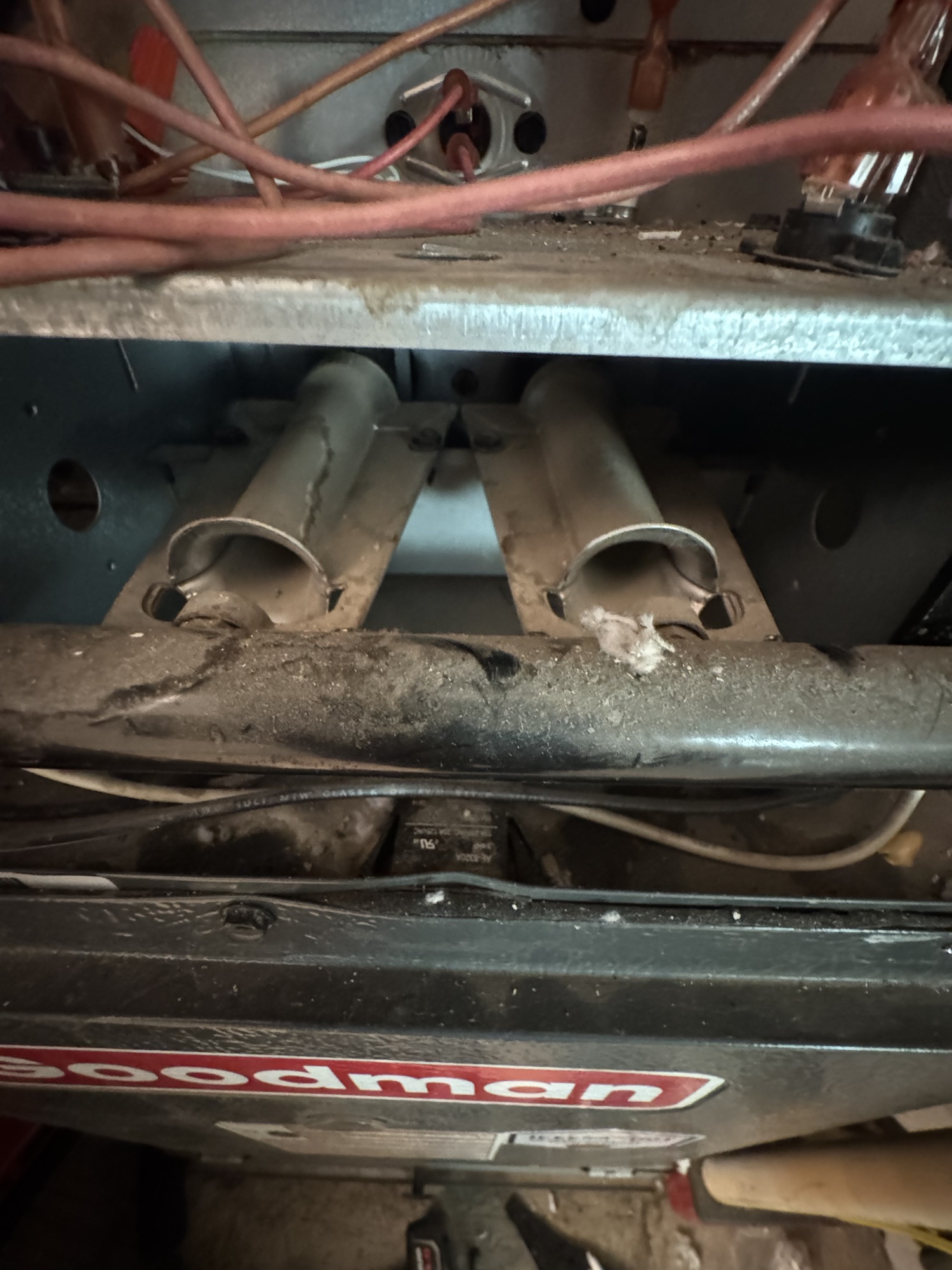
The photo at the top of this post is from one of our own service calls. Those are the burners on a Goodman gas furnace, caked with dust and lint. When burners get that dirty, the gas can't light the way it should, and the furnace may not turn on at all.
As Bernie, our owner and lead tech, puts it: lack of maintenance is what causes it. Nothing was "broken" in the usual sense. The furnace just needed the cleaning and checks it would have gotten during a routine tune-up.
What gets checked during a furnace tune-up
Every furnace is a little different, but a thorough tune-up on a gas furnace generally includes:
- Burners and burner area. Cleaning dust and debris so the gas lights cleanly and evenly.
- Ignition system. Checking the hot surface igniter (or pilot) for cracks or wear. A cracked igniter is one of the most common reasons a furnace won't start.
- Flame sensor. A dirty flame sensor can make the furnace light and then shut off seconds later. Cleaning it is quick.
- Inducer (draft) motor and venting. Making sure the inducer runs smoothly and the vent path is clear so combustion gases leave the home the way they're designed to.
- Blower motor and wheel. Checking that the blower moves air properly and isn't straining, noisy, or caked with dirt.
- Electrical connections and control board. Looking for loose wires, burn marks, or error codes before they turn into a breakdown.
- Safety controls. Verifying the limit switch and other safety devices work as intended.
- Thermostat operation. Confirming the thermostat calls for heat correctly and the system responds.
- Air filter. Checking the filter and replacing it if it's dirty.
- Condensate drain (high-efficiency furnaces). 90%+ efficiency furnaces produce water. If that drain line clogs, it can back up and overflow into the closet or attic.
That last one matters more than people think. We've opened furnace closets where a backed-up condensate line with no safety float switch let water spill onto the floor and drywall, and mold had started growing. Again, that's the kind of thing routine maintenance is meant to catch early.
Why a tune-up is worth it in Southern California
Because our furnaces run only part of the year, small problems tend to show up all at once when the weather turns. Dust settles on burners over the summer, attic furnaces bake in the heat, and parts that were "fine" last spring can fail on the first cold start.
A tune-up helps you:
- Avoid surprise no-heat calls on the coldest night of the week.
- Catch worn parts early, like a cracked igniter or a weak motor, while you can schedule the repair.
- Keep the system running the way it was designed to, with clean burners and good airflow.
- Make an informed repair-or-replace decision if your furnace is getting older, instead of making it under pressure when it quits.
We also see plenty of furnaces in attics around Corona, Menifee and Rancho Cucamonga. Attic units are out of sight and out of mind, which is exactly why they're worth having checked.
What you can do yourself between tune-ups
You don't need tools or training for these:
- Change your air filter regularly. Check it monthly during heating season and replace it when it looks dirty. A clogged filter restricts airflow and makes the whole system work harder.
- Keep the area around the furnace clear. Don't store boxes, paint, or cleaning supplies in the furnace closet.
- Keep return vents and supply registers open and unblocked by furniture or rugs.
- Test the heat early. Turn it on for a few minutes in the fall before you really need it. A short dusty smell on the first run is common; a smell that doesn't go away is a reason to call.
- Check your thermostat batteries if your thermostat uses them.
Leave anything inside the burner compartment, gas valve, or electrical panel to a trained technician.
When to call instead of waiting for a tune-up
Don't wait for a scheduled visit if you notice:
- The furnace clicks or tries to light but never does
- It lights and then shuts off after a few seconds
- Little or no air coming from the vents while the furnace runs
- A burning or electrical smell that doesn't fade
- New grinding, squealing, or loud humming noises
- Water around the furnace or in the closet
- A gas smell. If you smell gas, leave the home and call your gas utility from outside right away.
Frequently asked questions
How often should I get a furnace tune-up?
Once a year is the common recommendation, ideally in the fall before heating season. Check your furnace manufacturer's guidance too, since some warranties expect regular maintenance.
How long does a furnace tune-up take?
It depends on the system and how easy it is to reach (an attic unit takes longer than a closet unit), but it's usually a single visit, not an all-day job.
My furnace works fine. Do I still need a tune-up?
The dirty burners in our photo belonged to a furnace that had been "working fine" right up until it wasn't. A tune-up is about catching problems before they stop the heat.
Can a tune-up include my AC too?
Yes. Many homeowners pair a fall heating check with a spring AC check. Our Comfort Club maintenance plan is built around keeping both sides of your system looked after through the year.
What if the tech finds a problem?
You'll get an explanation of what was found and your options before any repair is done. If a bigger repair or a replacement makes sense, financing is available through Service Finance, an independent third-party lender.
Get your furnace ready for winter
If your furnace hasn't been looked at in a while, now is a good time, before the cold nights stack up. Icee Hot Air Conditioning and Heating is a family-owned company serving homeowners in Corona, Menifee, Rancho Cucamonga and nearby communities across Riverside, San Bernardino and Orange counties. Call 951-427-9117 or request service online to schedule a furnace tune-up.
Recent Posts